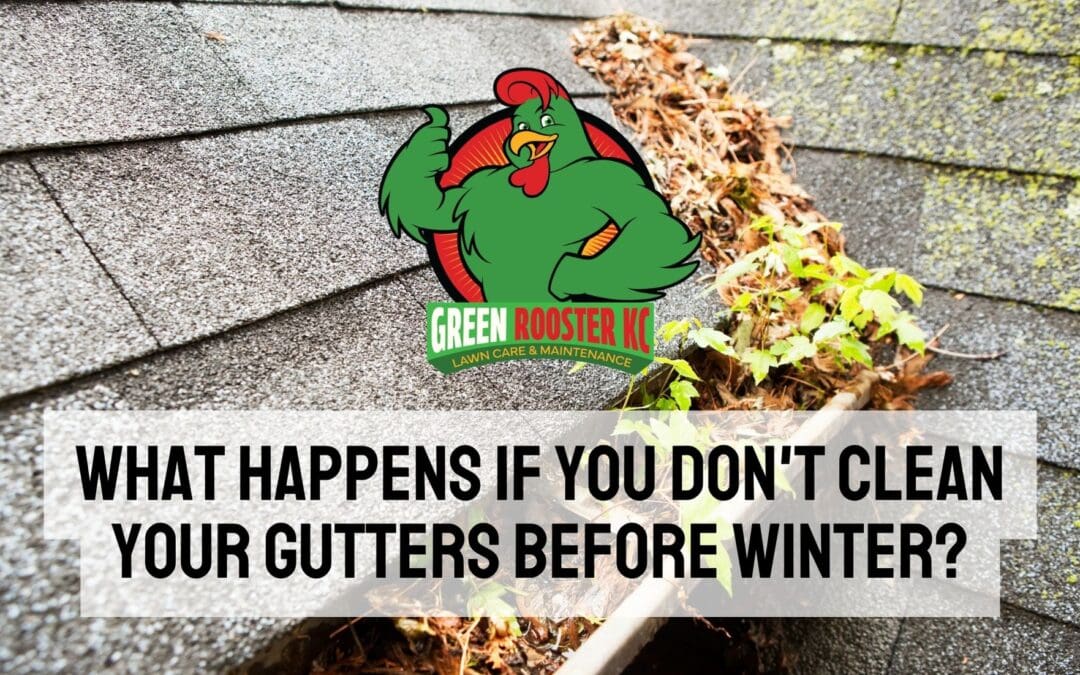
Every fall, gutter cleaning lands on the to-do list... and every fall, a lot of people decide it can wait until spring.
It can't.
Here's what actually happens when gutters full of leaves and debris head into a Kansas City winter.
Water Goes Where It Shouldn't
Gutters exist for one reason: to move water away from your house. When they're clogged, they stop doing that job.
Backed-up water spills over the edge and runs straight down the side of the house.
Over time, or even after a single heavy rain, that water finds its way into places it should never be:
- Behind siding, where it causes rot and mold
- Along the foundation, where it pools, saturates the soil, and can seep into basements and crawlspaces
- Under the roofline, where it works into the fascia boards and soffits
None of these have quick or cheap fixes.
Foundation water intrusion alone can run into thousands of dollars to remediate.
The gutter cleaning that prevents these problems costs a fraction of that.
In a Kansas City Winter, Water Becomes Ice
This is where clogged gutters go from a nuisance to a structural problem.
When standing water in a clogged gutter freezes, it expands.
That expansion can:
- Pull gutters away from the fascia, bending hangers and breaking seams
- Form ice dams at the roofline, ridges of ice that prevent snowmelt from draining and force water back up under shingles
- Crack or separate gutter seams, turning a clogged gutter into a leaking one
Ice dams are particularly common in KC during freeze-thaw cycles: warm days that melt snow on the roof followed by hard freezes at night.
A clean, functional gutter drains that melt water before it has a chance to refreeze. A clogged one traps it.
The Fascia Takes the Longest Beating
Fascia boards are the trim that runs along the roofline where gutters are attached. In most KC homes they're made of wood, painted and sealed, but not designed to stay wet.
Gutters that overflow or hold standing water keep fascia consistently damp through fall and winter. That moisture causes paint to peel, wood to soften, and eventually rot to set in. By the time the damage is visible from the ground, it's usually significant.
Replacing rotted fascia means removing the gutters, pulling the damaged boards, installing new ones, repainting, and reattaching everything.
A straightforward gutter cleaning prevents all of it.
Pests Move In
A gutter full of wet, decomposing leaves is genuinely attractive real estate for certain critters. Mosquitoes lay eggs in standing water, and the damp organic matter is hospitable to earwigs, millipedes, and other insects looking for a protected place to overwinter close to the warmth of your house.
This one is lower stakes than water damage, but it's worth mentioning: a clean gutter is a less interesting gutter to anything you don't want living near your roofline.
When Should You Clean Them?
The sweet spot in Kansas City is after the majority of leaves have fallen, typically late October into November. Clean too early and you'll need to do it again after the big drop. Wait until December and you may be dealing with partially frozen debris that's significantly harder to clear.
One cleaning per fall handles it for most homes. If you have heavy tree cover, especially maples or oaks that drop late, two passes may make more sense.
While you're at it, check that downspouts are clear and draining at least four to six feet away from the foundation. A gutter that drains properly but deposits water right at the base of the house is only solving half the problem.
Let Green Rooster KC Handle It
Gutter cleaning is one of those jobs that's easy to keep pushing back, until it isn't.
Green Rooster KC offers gutter cleaning as part of our fall property maintenance services across the Kansas City metro area.aning as part of our fall property maintenance services across the Kansas City metro area.
We're booking fall cleanups now. Contact us for a free estimate.