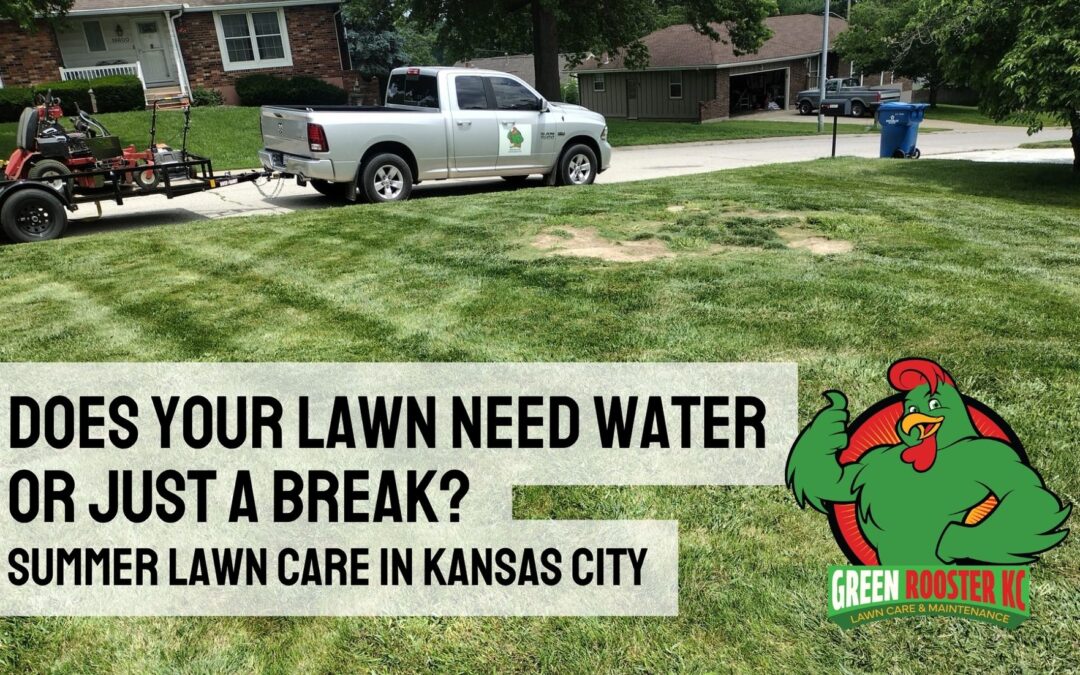
One of the most common lawn care mistakes in a Kansas City summer isn't neglect... it's overreaction. A lawn that's gone dull or tan in by August isn't necessarily dying. It might just be resting.
Here's how to tell the difference, and what to do in either case.
Dormancy vs. drought stress
Cool-season grasses like tall fescue naturally slow down or go dormant when summer heat peaks. This is a survival mechanism, not a failure. A dormant lawn looks brown or tan, growth stops, and it can stay that way for weeks.
Drought stress is different. A stressed lawn is actively struggling: it needs water and isn't getting enough to cope. Left untreated, drought stress can weaken the lawn enough that it doesn't recover well in fall.
How to tell them apart:
| Sign | Dormancy | Drought stress |
|---|---|---|
| Color | Even tan or straw | Dull blue-gray or uneven brown |
| Footprints | May stay visible | Stay visible for a long time |
| Texture | Dry but intact | Blades folded or curled |
| Pattern | Uniform across lawn | Irregular, often worst in full sun |
If your lawn is primarily tall fescue and you're heading into a stretch of 95°F days with no rain in the forecast, it may make more sense to let the lawn go dormant than to fight it with constant watering.
A properly dormant lawn needs about half an inch of water every two to three weeks to stay alive... not green, just alive. That's a maintenance water, not a growth water.
When temperatures drop in late August and September and fall rains return, the lawn will green back up on its own.
The case for consistent watering
If you'd rather keep the lawn green through summer (or if you have a newer lawn that hasn't established deep roots yet) consistent, deep watering is the answer.
The goal is about one inch of water per week, applied in one or two sessions. Shallow daily watering trains roots to stay near the surface, which makes the lawn more vulnerable to heat. Deep, infrequent watering encourages roots to go down, where it's cooler and moisture lasts longer.
Water in the early morning, before 9 a.m. if possible. Midday watering evaporates too fast. Evening watering leaves moisture on the blades overnight and increases fungal risk.
What mowing has to do with it
Whether the lawn is dormant or active, mowing too short in summer makes everything worse. Keep the blade high (3.5 to 4 inches for tall fescue) and never cut more than a third of the blade at once.
A longer blade shades the soil, slows evaporation, and helps the grass handle the heat.
Ready for fall
August is actually when fall lawn care starts. If you're planning to aerate, overseed, or do a big cleanup before winter, now is the time to get on the schedule.
Green Rooster KC handles mowing, maintenance, seasonal cleanup, and more across the Kansas City area.